Low Range Offroad 4x4 Truck Setup
Tire pressure, differential locks, and low range — the three tools that turn hard trail into crawlable line.
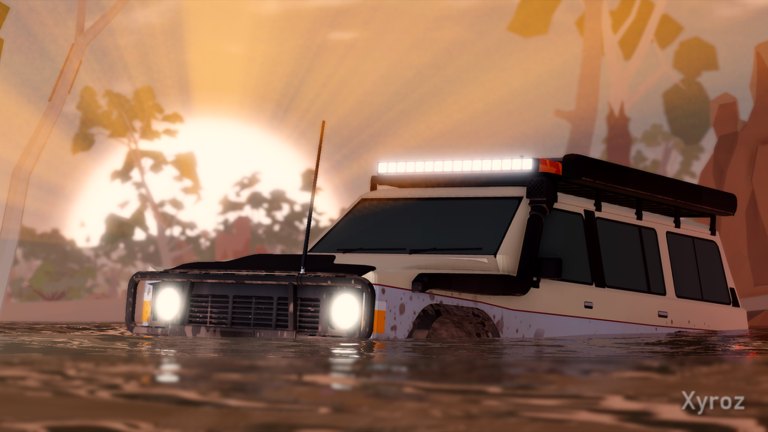
When Low Range: Offroad 4x4 gets hard, MTBAce Studios tells you to set up the truck: air down the tires, lock the differentials, and drop into low range. This guide explains what those three tools are for, how community players actually toggle them on Roblox, and how to change one variable at a time so you learn instead of guessing. Pair this page with Controls for bindings, Getting Started for line reading, Fuel and Checkpoints for 4WD burn, and Winch Guide when setup is not enough. The Guides Hub links everything.
Early Access warning up front: exact PSI numbers, menu paths, and keys can change. Official marketing confirms the three systems; community beginner videos widely report 4 for tire pressure and K for lockers, with gear modes L and L+ on the selector. If your build shows different glyphs, trust the HUD and keep the ideas.
The problem each tool solves
Think in problems, not in “always on” recipes.
- Tire pressure (air down): Soft ground and uneven contact want a larger, more conforming contact patch. Airing down before mud is a common habit in community guides — press the tire control, watch the on-screen indicator (often bottom-left), and stop at the mark meant for mud before you enter. Entering soft ground on a hard street pressure is how you skate and dig.
- Differential locks: When one wheel spins in the air or in slime while another has grip, an open diff can waste torque. Lockers help the truck use the wheel that still bites. Engage when you are already crawling and still not progressing; do not treat lockers as a substitute for a terrible line.
- Low range (L / L+): When you cannot approach slowly enough to place tires, you need crawl gearing. Low range exists so ledges and technical steps can be taken with time to steer and time to abort.
If you change line, pressure, lockers, and range all at once, a success teaches you nothing. On practice ground, change one thing, retry the same obstacle, and note the difference.
Tire pressure workflow
Community tip flow that matches popular beginner videos:
- Spot mud or other soft ground ahead while you still have room to stop.
- Use the tire pressure control (commonly 4) to start airing down.
- Watch the indicator until it reaches the mud-oriented mark, then confirm/stop the adjustment as your build requires (often pressing 4 again).
- Enter the section in a controlled gear — often L — with a plan for the exit.
- After the soft section, reassess. Soft tires that helped in mud may not be what you want for a long easy connector; Early Access feel can vary, so test on your truck.
You do not need a published universal PSI table to drive well. You need the habit of preparing before the obstacle. If you only remember air-down after you are axle-deep, you already spent the cheap fix.
Differential lock workflow
Use lockers as a response to a specific failure mode: wheel spin without forward progress while another tire could push. Community guides commonly toggle lockers with K. Typical moments:
- One tire hanging off a ledge while the opposite side still touches.
- Diagonal weight shift on roots where a spinning tire digs and the planted tire gets nothing.
- Soft holes where unlocked behavior just excavates a crater for the server to inherit.
After you clear the problem, think about turning the lockers off on easier ground. Permanent locker-on driving can mask bad lines and may not be what you want for every steering move. Exact on-road manners depend on the current build — learn by contrasting locked versus unlocked on the same gentle turn.
Low range: L versus L+
The gear selector includes Automatic, L, and L+ alongside Reverse and Neutral (see Controls). Automatic is fine when the trail is basically a dirt road. Switch toward low range when:
- A ledge needs tire placement more than momentum.
- You keep hitting obstacles too hot to steer.
- You want to feel slip early enough to abort.
L+ is the community-facing label for the deeper crawl option in beginner videos — use it when L still feels too eager for the step in front of you. Select the mode on stable ground when you can. Mid-air panic shifts are how people stall in worse positions.
Combine low range with a sane line. Low range will not invent grip on a polished mud wall you chose for no reason. It gives you time. Time is what lets tire pressure and lockers matter.
Suggested order when you are stuck progressing
There is no official universal order published as a single chart, but a practical loop works well:
- Abort if you can. Reverse to firm ground. A new line beats a heroic spin.
- Slow the approach. Move to L or L+ so you can place tires.
- Prepare soft ground. Air down before re-entering mud.
- Add lockers if a wheel is wasting torque after the above.
- Winch if the truck will not move under its own power — Winch Guide.
If step 1 is available, take it. Setup tools are not excuses to stay in a hole that is getting deeper for everyone on the server.
Surface-specific setup notes
Mud
Air down early. Prefer shallower entries because ruts deepen with traffic. Crawl in low range. Lockers if a tire is excavating while the truck sits still. Ease off when you are only digging. Shared mud remembers — your spin is a gift to the next twenty players in the worst way.
Rock
Prioritize low range and line. Place fronts with a plan for the rears. Lockers help when a wheel unloads mid-step. Tire pressure still matters for conformity over sharp edges, but the classic fail is rushing Automatic onto a ledge you cannot steer.
Roots
Aim small steps. Straighten between hits. Low range helps you avoid launching from one root into a bad angle on the next. Lockers when diagonal traction breaks down.
Water
Pick the exit first. Steady crawl beats a splash. Treat unknown depth with respect; official copy confirms water changes grip without publishing a safe number for every truck. If you lose bite, do not create a deeper launch hole — reverse or winch thoughtfully.
Setup versus fuel
4WD burns more fuel. Hard traction tools and impatient throttle also spend the tank while you go nowhere. At each cache — refill plus checkpoint — decide whether the next stretch deserves full soft-tire, locker, low-range aggression. Details live on Fuel and Checkpoints. Grip is often worth the burn on a short technical pitch; leaving every tool maxed on a long easy connector is how people walk to the next cache in spirit.
Co-op setup etiquette
In a group, the lead truck’s setup choices still carve the mud. If the leader digs a trench on street pressure and full throttle, followers inherit a worse stage. Agree to wait, watch, and leave reverse room. If someone needs a winch to a friend’s truck, park as a stable anchor on firm ground — not as a second victim in the same hole.
Practice drills
- Same small mud patch three times: wrong pressure, corrected pressure, corrected pressure plus L. Note which change mattered.
- Same ledge twice: Automatic versus L. Note steering time.
- Same diagonal root: unlocked versus locked after you are already failing. Note whether lockers help only after line and range are sane.
Related reading
- Getting Started — first trail habits and line language.
- Controls — selector modes and community key reports.
- Winch Guide — when setup cannot free you.
- Fuel and Checkpoints — 4WD cost and cache planning.
- Guides Hub — full directory.
Set the truck for the ground you are about to drive, not for the ground you drove ten minutes ago. That single habit separates clean finishes from Early Access rage quits in Low Range Offroad 4x4 on Roblox.
Frequently Asked Questions
Quick answers for Low Range Offroad 4x4 players.
What are the three main truck setup tools in Low Range?
Air down the tires, lock the differentials, and drop into low range (L / L+). The developer highlights all three for hard trail sections.
Which keys do players use for tire pressure and diff locks?
Community beginner guides widely report 4 for tire pressure adjustment and K for differential lockers. Confirm against your HUD because Early Access bindings can change.
Should I leave diff locks on for the whole stage?
Use them for specific traction failures, then reassess on easier ground. Lockers help when a wheel wastes torque; they are not a substitute for a better line.
When should I switch from Automatic to L or L+?
Before ledges and technical climbs where you need time to place tires. If the truck lunges too hard to steer the contact patches, you are usually in too fast a mode.
Does setup replace the winch?
No. If the truck cannot move under its own power, use a tree or friend's truck as a winch anchor. See the Winch Guide after you reverse out when possible.
How does truck setup interact with fuel?
4WD burns more fuel, and spinning in place wastes tank for no progress. Prepare tires and range before soft ground, then reassess at each fuel cache checkpoint.